

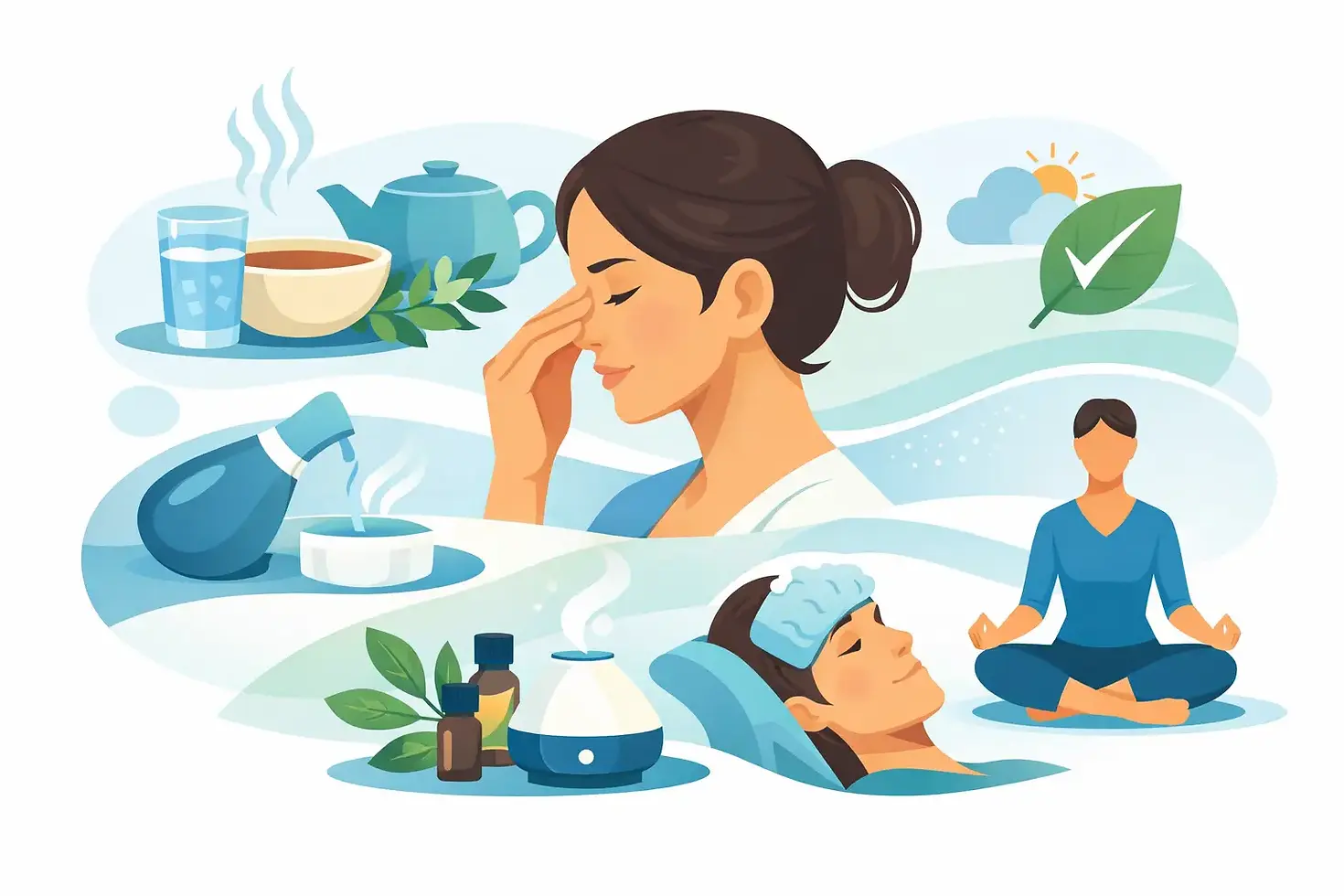
7 Non Drug Sinus Pressure Relief Options
That heavy, boxed-in feeling across your cheeks, eyes, or forehead can make it hard to think, sleep, or get through a normal workday. If you are searching for non drug sinus pressure relief, you are usually not looking for a complicated wellness routine. You want your head to feel clear, your face to stop aching, and your breathing to feel normal again.
Sinus pressure often gets treated like a simple congestion problem, but it is not always that simple. For some people, it comes on with allergies. For others, it follows a cold, dry indoor air, poor sleep, stress, or repeated inflammation that never fully settles down. That is why the best non-drug approach is rarely just one trick. Real relief usually comes from improving drainage, calming inflammation, and reducing the triggers that keep the pressure coming back.
Why sinus pressure builds up in the first place
Your sinuses are hollow spaces connected to the nasal passages. When the lining becomes irritated or swollen, those passageways can narrow. Mucus does not drain as well, pressure builds, and the result can feel like a dull ache, fullness in the face, headache, ear pressure, or pain that gets worse when you bend forward.
This can happen during a cold, but recurring sinus pressure is also common with seasonal allergies, indoor allergens, dry air, and chronic inflammation. Some people also notice it gets worse when they are run down, sleeping poorly, or under prolonged stress. In clinical practice, that matters because short-term pressure and chronic sinus tension are not always driven by the same pattern.
Non drug sinus pressure relief at home
Home care can make a real difference, especially when symptoms are mild to moderate or just starting. The goal is to support your body’s ability to open the passages and move mucus rather than forcing a quick fix.
Steam and moisture
Warm steam can help loosen thick mucus and reduce that tight, dry sensation inside the nose and sinuses. A hot shower, a bowl of steaming water used carefully, or a humidifier in a dry bedroom can all help. The trade-off is that steam feels best for some people and less effective for others, especially if the main issue is not dryness but active inflammation from allergies.
Saline rinsing
A saline rinse can be one of the most practical ways to support drainage. It helps clear irritants, thin mucus, and reduce buildup in the nasal passages. This tends to be especially useful during allergy season or after exposure to dust, smoke, or dry indoor air. It does need to be done properly and gently. Too much rinsing or poor technique can irritate sensitive tissue.
Warm compresses
Placing a warm compress across the cheeks, eyes, or forehead may help ease discomfort and encourage circulation in the area. It is simple, low risk, and often works well alongside steam or saline. For pressure that feels more throbbing or inflamed, some people prefer alternating warm and cool compresses instead of using heat alone.
Hydration and indoor air
If mucus becomes thick and sticky, it drains less easily. Drinking enough water and improving indoor humidity can make a meaningful difference. This sounds basic, but dry office air, heating systems, and poor sleep can quietly keep sinus symptoms going longer than expected.
When pressure is really about inflammation
Not all sinus pressure is caused by a lot of mucus. Sometimes the bigger issue is inflamed tissue that narrows the sinus openings even when you do not feel heavily congested. This is common in people with allergies or recurring sensitivity to weather changes, dust, animal dander, or certain indoor environments.
In that situation, non drug sinus pressure relief often depends on reducing the irritation that keeps the tissue swollen. Washing bedding regularly, managing indoor dust, using air filtration, and paying attention to symptom patterns can help. If your pressure predictably flares in spring, after yard work, or in a dusty workspace, the trigger itself deserves as much attention as the pressure.
Food can play a role for some people too, though not in a one-size-fits-all way. Some patients notice more congestion with alcohol, dairy, or very inflammatory eating patterns, while others do not. The point is not to follow a strict list without reason. It is to look for repeatable patterns in your own body.
Where acupuncture and Traditional Chinese Medicine fit
For people who want a more hands-on, non-pharmaceutical treatment path, acupuncture is often worth considering. In a Traditional Chinese Medicine approach, sinus pressure is not viewed only as a local problem in the face. It may also reflect broader patterns involving inflammation, immune reactivity, circulation, stress load, or internal imbalance that keeps symptoms returning.
From a practical standpoint, acupuncture is used to help open the nasal passages, reduce pressure, calm irritation, and support the body’s regulatory function. Many patients seek care because they are tired of cycling through temporary relief without addressing why their symptoms keep coming back.
One reason this approach appeals to patients is that it does not have to be aggressive to be effective. At Time Cure Clinic, treatment is centered on minimal needle use and low stimulation while still aiming for a strong therapeutic response. For patients who are already tense, inflamed, or sensitive, that gentler style can feel much more manageable.
Why timing and technique can matter
Not every acupuncture treatment is delivered the same way. Technique, point selection, and timing all influence the result. A more specialized method may focus on activating meridian points when their activity is considered heightened according to a structured treatment system. That type of treatment is especially relevant for patients with chronic or recurring symptoms, where precision matters more than a generic routine.
In sinus care, that can be helpful because recurring pressure is often not random. It tends to follow patterns. Some patients flare with weather shifts. Others worsen with fatigue, pollen, or stress. When treatment is individualized rather than standardized, there is more room to address those patterns directly.
Herbal support and complementary care
Traditional herbal medicine may also be considered as part of non drug sinus pressure relief, depending on the person and the symptom pattern. This is not about taking a random supplement for congestion. In Traditional Chinese Medicine, herbs are selected based on the overall presentation, including whether the issue appears more related to dryness, dampness, heat, allergy tendency, or chronic weakness.
That is an important distinction because two people can both say, "I have sinus pressure," while needing very different support. One may feel blocked and heavy with thick mucus. Another may feel dry, irritated, and inflamed with very little discharge. Good care depends on those details.
Other supportive therapies such as moxibustion or cupping may be appropriate in some cases, especially when sinus issues connect with broader patterns of circulation, immune stress, or lingering cold sensitivity. It depends on the patient, the season, and whether symptoms are acute or long-standing.
When to get evaluated instead of waiting it out
Natural care has a valuable place, but it is not the same as ignoring symptoms that need medical attention. If sinus pressure comes with high fever, severe facial swelling, worsening pain, vision changes, or symptoms that are unusually intense or prolonged, it is wise to get evaluated promptly.
It is also worth seeking professional help if your sinus pressure keeps returning, interrupts sleep, affects work, or always seems tied to the same triggers. Recurrent symptoms are a sign that the issue may be more than a passing cold. The longer that pattern continues, the more helpful a personalized treatment plan becomes.
Choosing the right non-drug approach for you
The best non-drug strategy depends on what is actually driving your symptoms. If your pressure mainly comes from dry air and thick mucus, steam, hydration, and saline rinsing may help quickly. If allergies are the main problem, trigger reduction and inflammation support matter more. If the pattern is chronic, stress-sensitive, or keeps returning despite home care, acupuncture and Traditional Chinese Medicine may offer a more complete path.
That is the real point with sinus pressure. Relief is not only about opening the nose for an hour. It is about helping the body stop repeating the same cycle.
If your symptoms have been lingering longer than they should, it may be time to look beyond temporary fixes and choose care that is tailored to your pattern, not just your pressure. Better breathing, clearer focus, and less facial pain can start with one simple shift - treating the cause with as much attention as the symptom.


Comments